
Indication of a potential US Federal Reserve rate cut may trigger optimism in the domestic equity market, with investors' attention shifting to the looming deadline for additional US tariffs on Indian goods in a holiday-shortened week ahead, analysts said.

From the Sensex firms, Tata Steel tanked the most by 4.57 per cent. ICICI Bank, Power Grid, HCL Tech, Tech Mahindra, Infosys and Kotak Mahindra Bank were also among the laggards. Mahindra & Mahindra, State Bank of India, ITC and Bharat Electronics were among the gainers.

IMF Managing Director Kristalina Georgieva discusses the potential of artificial intelligence to boost global growth, particularly in India, while also addressing the significant risks of job displacement and financial instability.

The United States, which entered this war in expectation of a short, sharp win along the Venezuela model, is now preparing for deeper involvement in a conflict it does not fully control, without the allies it typically relies on, against an adversary that is not behaving as expected, in a global environment that is already absorbing economic shock. Prem Panicker continues his must read daily blog on the Gulf War.
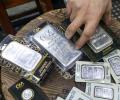
Silver prices extended their record-breaking rally for a sixth straight session on Monday, surging 6 per cent to touch a lifetime high of Rs 2,54,174 per kilogram in futures trade amid strong investor demand and bullish global trends. On the Multi Commodity Exchange (MCX), silver futures for March delivery surged Rs 14,387, or 6 per cent, to hit a new record of Rs 2,54,174 per kilogram.

'This policy is a vision to position Karnataka as the epicentre of India's space ambitions'

Country's startups are carving a unique path by prioritising local, application-led innovation over the global pursuit of scale.

'There are certain sovereign AI domains where we must build capabilities using our own data, our own language models, and make our own attempts at global models.'

Stock market participants would track global trends and foreign investors' trading activity in a holiday-shortened week ahead, amid lack of any major domestic trigger in sight, analysts said. Equity markets will remain closed on Wednesday for Christmas.
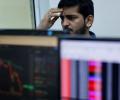
From Sensex shares, Larsen & Toubro, Tata Motors, Hindustan Unilever, Asian Paints, ITC, Power Grid, NTPC and Reliance Industries were the major laggards. Among the gainers, Bajaj Finance jumped over 5 per cent. Mahindra & Mahindra, Bajaj Finserv, Bharti Airtel and Maruti also ended higher.

Households should moderate large discretionary expenses for the time being.
'They should prioritise essential spending. They should maintain an emergency fund covering 6 to 12 months of expenses.'

The benchmark BSE Sensex's trailing 12-month price-to-earnings (P/E) multiple has declined to 20.2x, its lowest since May 2020, driven by a record $42 billion FPI selloff since September 2024 and concerns over corporate earnings and economic growth.

The US Fed interest rate decision, global trends, tariff-related developments and trading activity of foreign investors will drive the equity market movement this week, analysts said. Among macroeconomic data announcement, WPI inflation for February is scheduled to be announced on Monday.

Equity benchmark indices Sensex and Nifty advanced for the third straight session on Tuesday driven by firm global cues and optimism over India-US trade agreement, even as investors turned to profit-booking at higher levels.

Gold extended its record-breaking run to breach the Rs 1.5 lakh per 10-gram mark in futures trade on Tuesday, while silver surged to a lifetime high of Rs 3.27 lakh per kg as investors rushed to safe-haven assets amid mounting global tensions. On the Multi Commodity Exchange (MCX), gold futures for February delivery climbed Rs 6,861, or 4.7 per cent, to record Rs 1,52,500 per 10 grams after settling at Rs 1,45,639 per 10 grams in the previous session.

Bharat Electronics, Reliance Industries, Mahindra & Mahindra, Larsen & Toubro, InterGlobe Aviation, ICICI Bank and UltraTech Cement were among the other major gainers. Axis Bank, Infosys, Tata Consultancy Services, Trent and Titan were the laggards.

A strong third-quarter (October-December/Q3) performance for 2025-26 (FY26) has helped the stock of India's largest listed pharmaceutical (pharma) company, Sun Pharmaceutical Industries, gain about 7 per cent since the start of February.

Restoring weighted tax deductions and adopting a petty patents regime can foster firm-level innovative activity critical for competitiveness, points out Nagesh Kumar.
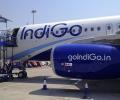
InterGlobe Aviation (IndiGo) is experiencing significant financial pressure, with its stock falling 18 per cent since the start of the Iran war, due to rising Brent crude prices, a weakening rupee, and disruptions to its West Asia and European flight networks caused by geopolitical tensions.

Stock market benchmarks ended with losses for the third straight session on Wednesday as heightened geopolitical tensions, weak global peers and persistent foreign fund outflows unnerved investors.

'The next two to three weeks will not be decided in Washington.' 'They will be decided in Tehran, in whatever calculation Iran makes about the costs of continued resistance against the costs of appearing to have yielded.'

A pickup in freight rates, rising fleet utilisation and a long-awaited replacement cycle are breathing fresh life into India's commercial vehicle (CV) market, strengthening the investment case for Tata Motors' CV arm (TMCV). Despite a broadly steady December quarter (Q3) performance, brokerages remain divided on whether the upswing is strong enough to offset margin pressures.

Platform-style partnerships between global investors and Indian developers are expected to gain further traction over the next few years. This comes as institutional capital increasingly shifts from one-off asset acquisitions to scalable, long-term strategies.

The decision to hike US H-1B visa application fee to $100,000, trade talks and the GST rate cut will be the key drivers for stock market movement this week, analysts said.
Sensex sinks 573 pts on global tensions and high crude prices
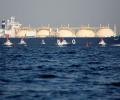
Analysts predict India will face oil price volatility and macroeconomic effects due to the escalating Iran crisis, though the country's oil supply chain is not yet structurally insecure.

The initial public offering (IPO) market in India last year was hot, with companies raising over $22 billion in 2025. But half of the 350-plus companies that listed on the stock exchange last year traded below their offer price, according to a new research report released by HSBC Global Investment Research - a sobering fact despite what otherwise looked like a rush of companies eager to list on the bourses.

The intriguing bit is that Trump is likely to attend the talks in Islamabad this weekend -- if he does, it will be the clearest signal yet that the US is ready to exit the war with some sort of win to show, since he cannot afford to go for the talks and return empty-handed, notes Prem Panicker in his must read blog on the Iran War

Foreign portfolio investors (FPIs) infused Rs 22,615 crore into Indian equities in February, marking the highest monthly inflow in 17 months, driven by factors such as the interim India-US trade deal, correction in domestic market valuations, and strong corporate earnings.

The delegations from the US and Iran head to Islamabad on Friday, carrying a ceasefire that is already fraying, a Strait that is technically open and practically closed, and a negotiating agenda that would challenge even parties actually negotiating in good faith, which these groups are not. Prem Panicker continues his must read blog on the Iran War.
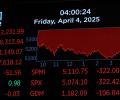
'If the US stagnates and falls into a recession, the dollar will weaken, oil prices will also dip. This augurs well for India.'

Foreign investors fled Indian equities in 2025 at a scale never seen before, pulling out a record Rs 1.6 lakh crore (USD 18 billion) as volatile currency movements, global trade tensions, especially potential US tariffs, and stretched valuations eroded risk appetite, though flows are expected to turn sustainably positive in 2026.

India is aiming to become a global hub for green hydrogen exports, eyeing nearly 10 per cent of the worldwide demand by 2030, Union Minister Shripad Yesso Naik said on Tuesday. Addressing FICCI Green Hydrogen Summit 2025, the minister said 8.62 lakh tonne annual hydrogen production capacity has been awarded to 19 companies.

Shares of Billionbrains Garage Ventures, the parent of online broking platform Groww, soared nearly 30 per cent on their market debut on Wednesday, defying the recent trend of muted listings. The stock opened at Rs 112 and hit a high of Rs 134.4 before settling at Rs 128.85 on the NSE - a gain of 28.85 per cent over its issue price of Rs 100.

Israel and the United States had a plan. Iran punched back. And now the Gulf is reeling, the world is beginning to feel the pain and, as on date, no one in Washington or Tel Aviv appears willing to admit that the punch has landed, notes Prem Panicker, continuing his must-read blog on the war in the Middle East.

From a surge in startups to crewed mission preparations, 2025 marks a transformative year as India eyes $44 billion space economy by 2033.

From the Sensex firms, Tech Mahindra, Tata Steel, Tata Motors, Titan, HDFC Bank, IndusInd Bank, Infosys and Kotak Mahindra Bank were among the biggest laggards. On the other hand, Adani Ports, Mahindra & Mahindra, Power Grid, Eternal and Hindustan Unilever were among the gainers.

The logic of war plus the gathering storms in US politics as the midterms loom large leave him with no real alternative but to negotiate, points out Ambassador M K Bhadrakumar.

This is the second-worst performance by the pack during this period over the last five years since CY20.

The BSE Sensex and the Nifty 50 declined around 4.5 per cent each since the start of the West Asia conflict.
